
Files
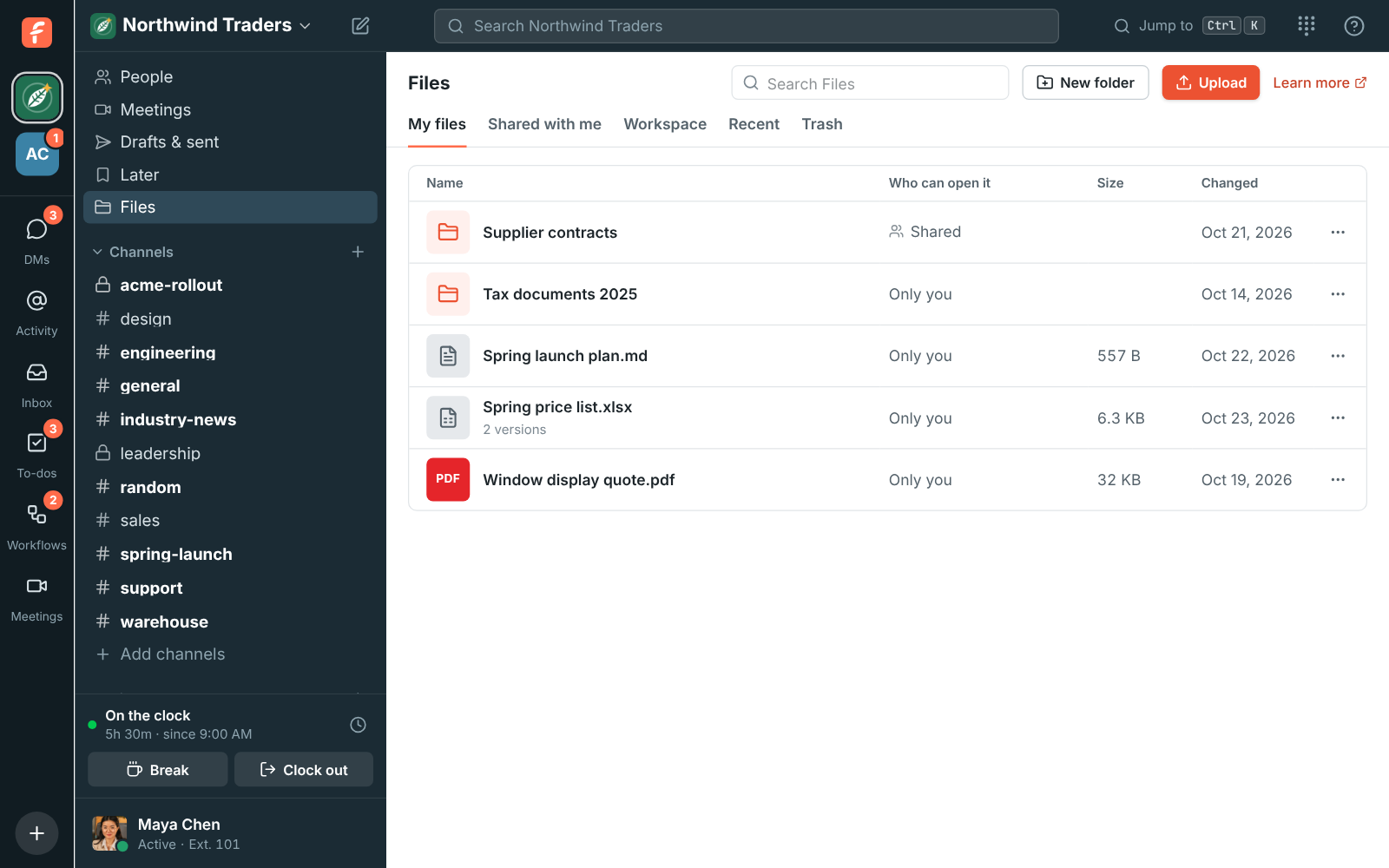
Files in the sidebar is a place for the files you keep, not just the ones you send. Put contracts, price lists and templates in folders, share a folder with a colleague or a team, and attach any of them to a message without hunting through your computer. Files is for members of the workspace; guests don’t have it.
The lists
Section titled “The lists”The tabs along the top of Files:
| Tab | What’s in it |
|---|---|
| My files | Your own folders and files. Nobody else sees them until you share them. |
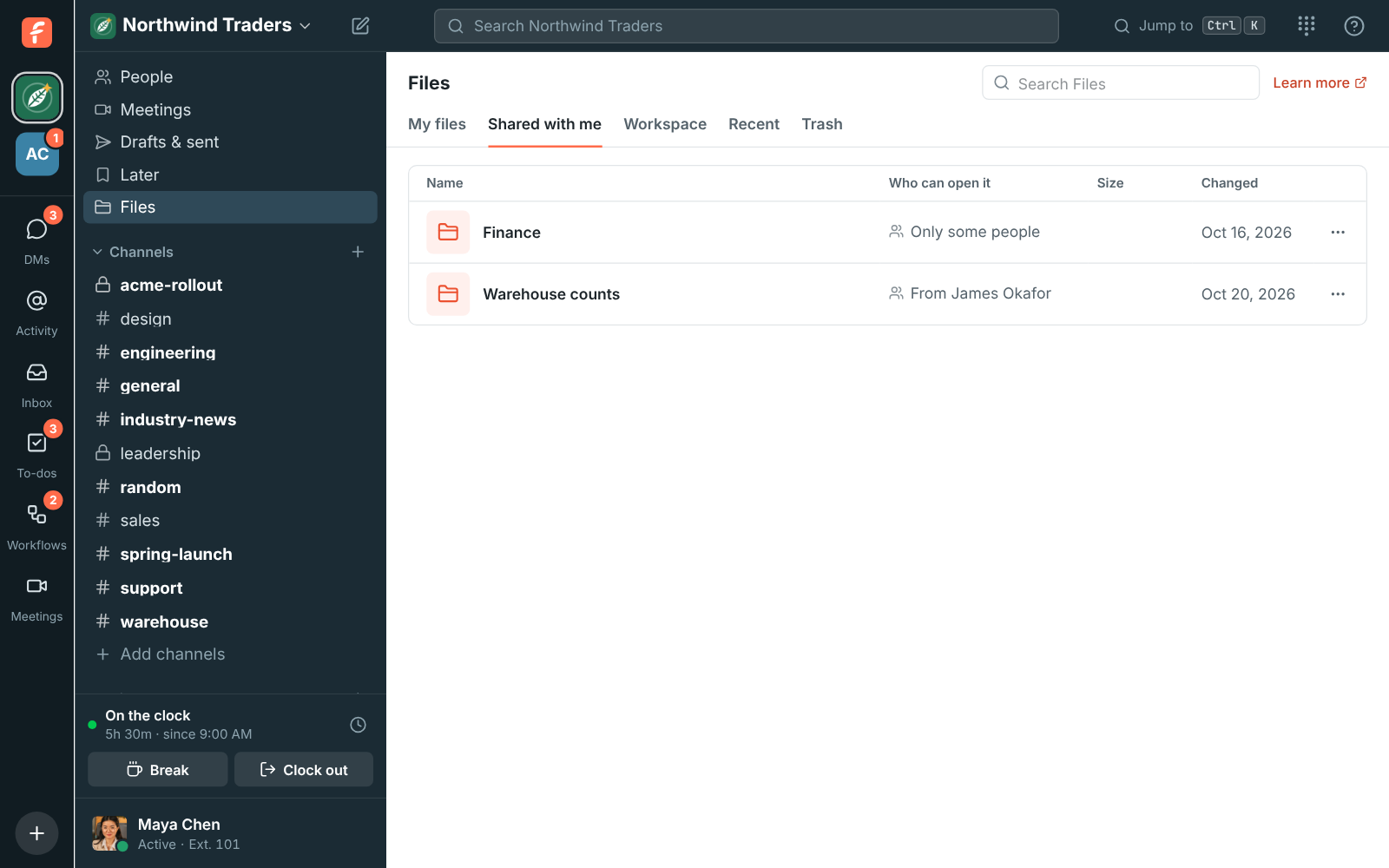
| Shared with me | Folders and files colleagues shared with you, or with a team you’re on. |
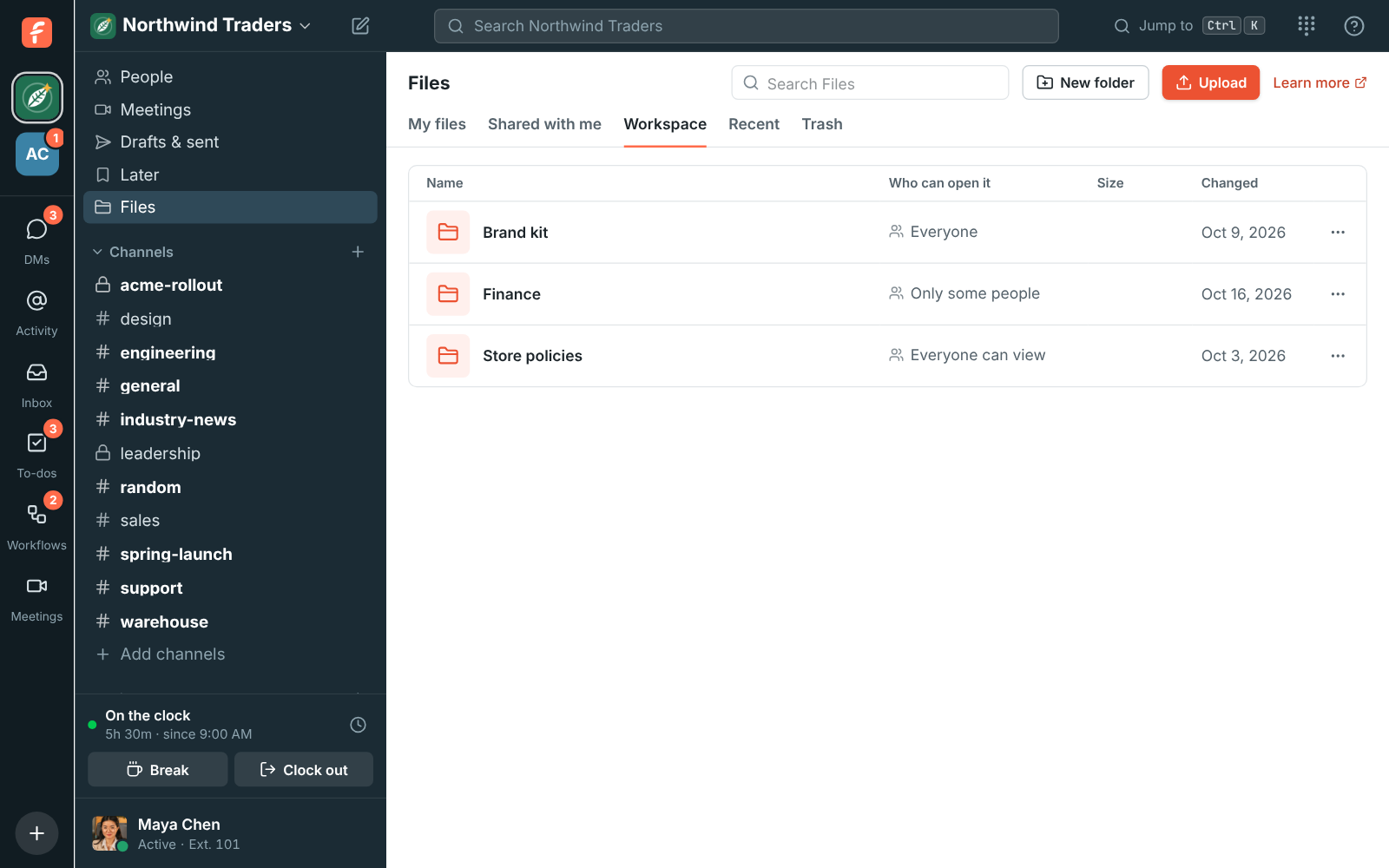
| Workspace | The workspace’s own folders, for everyone or the teams given access. |
| Recent | Files you added or changed lately, wherever they are. |
| Trash | What you deleted, for 30 days. After that it’s deleted for good. |
Search Files at the top finds folders and files by name in every list you can open.
Add files and folders
Section titled “Add files and folders”- Upload adds files from your computer to the folder you’re in. You can also drag files from your computer straight onto the list.
- New folder makes a folder where you are. Folders go inside folders, up to 12 deep.
- Save to Files keeps a copy of a file someone sent in a conversation: right-click the file (or open its ⋯ menu) and choose it. The copy goes to the top of My files, and stays there even if the message is deleted.
A file can be up to 50 MB, and Files counts toward the workspace’s storage like files sent in conversations (see plan limits). The workspace’s file type rules for members apply to uploads here too.
To move something, drag it onto a folder in the list, or choose Move up a folder from its ⋯ menu. Things move within the same place: inside My files, or inside the workspace’s folders. Moving something to another of the workspace’s top-level folders changes who can open it, so it takes Full access.
Share a folder or file
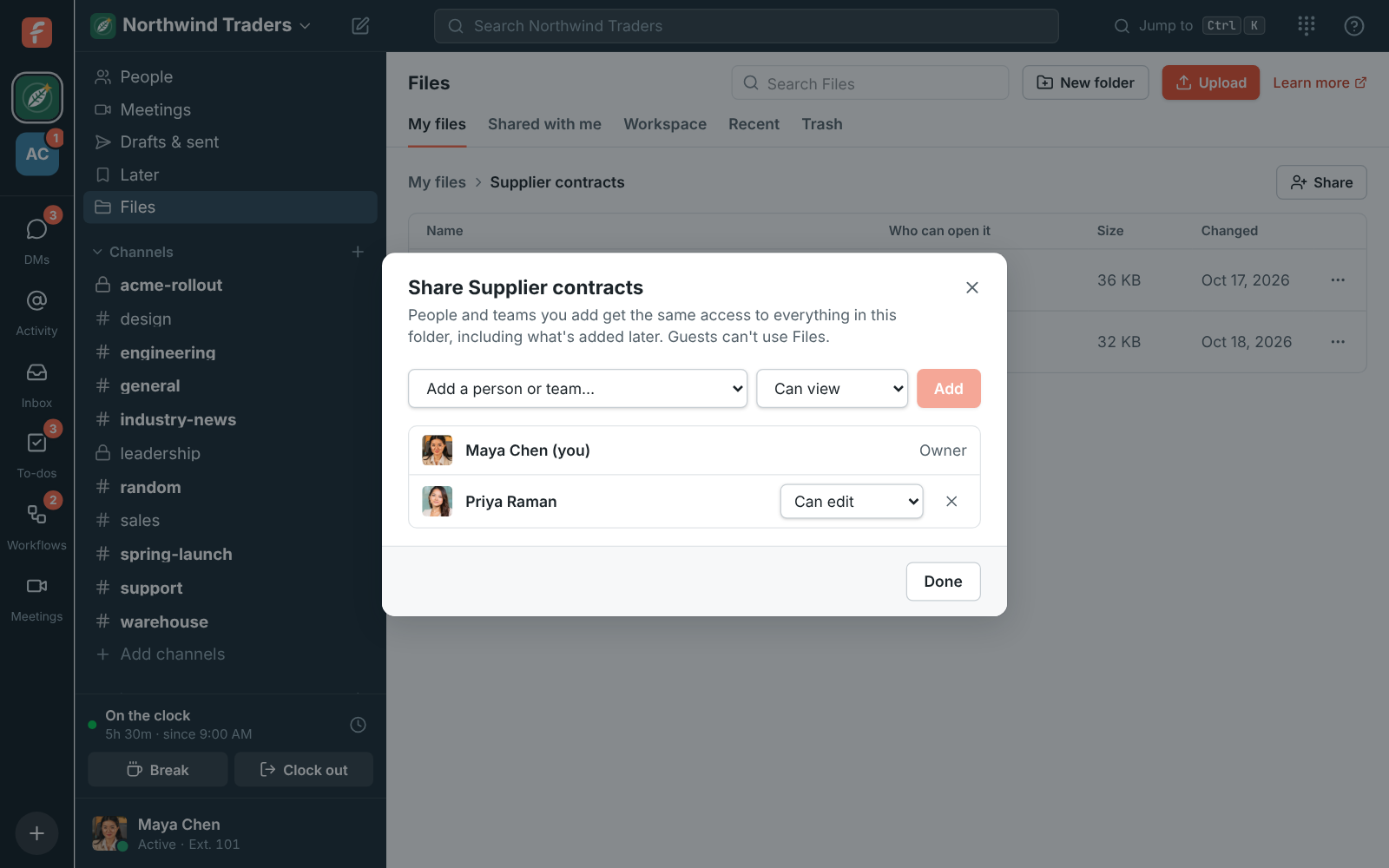
Section titled “Share a folder or file”Open a folder and click Share, or choose Share from a file’s ⋯ menu. Pick a person or a team, and what they can do:
| Access | What they can do |
|---|---|
| Can view | Open and download. |
| Can edit | Also add files and folders, upload new versions, rename and move. |
| Full access | Also move things to the trash, share them and change who has access, like you do. |
Sharing a folder shares everything in it, including what’s added later. A share on a folder above shows as From the folder… and is changed on that folder. A folder or file inside can give someone more access than the folder above, never less. Remove someone with × and they lose access straight away.
You always have full access to your own files, and to a file you upload anywhere for as long as you can open the folder it’s in. Without full access, the menu says Who has access and shows the list without changing it. Nobody can change their own access.
What colleagues share with you shows under Shared with me:
The workspace’s folders
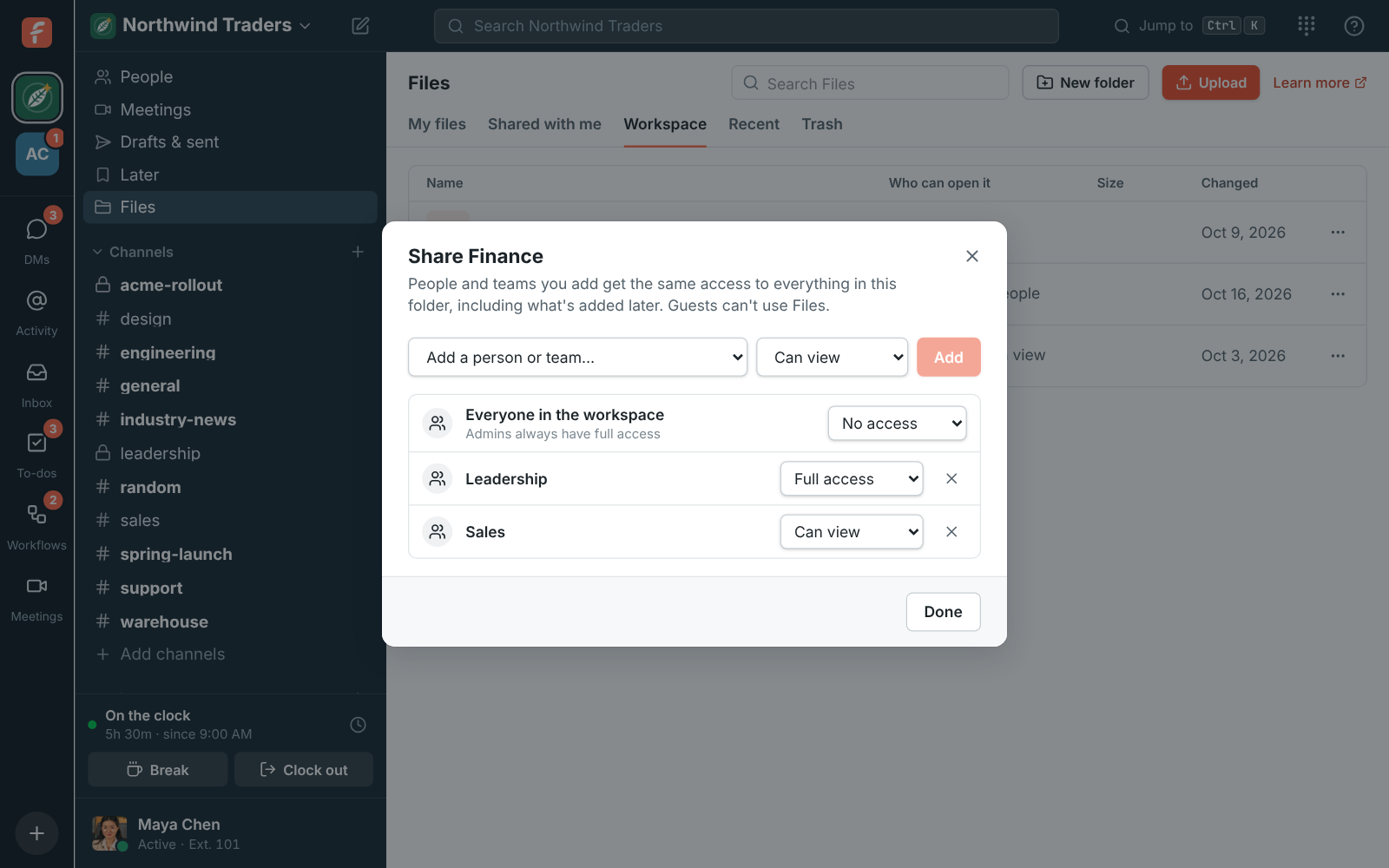
Section titled “The workspace’s folders”Folders under Workspace are for things the team shares: a brand kit, store policies, templates, or a Finance folder only some people open. Each top-level folder there says what Everyone in the workspace gets in it and everything inside:
- Can edit (a new folder starts here): everyone can open it and add to it.
- Can view: everyone can open it; only the people and teams you add can change it.
- No access: only the people and teams you add can open it. It doesn’t show for anyone else.
Open the folder’s Share to set it, and add people or teams with the access they need. Admins always have full access to the workspace’s folders. Whoever makes a top-level workspace folder is added to it with Full access, which admins can change; a folder made inside another gets the same access as the folder it’s in.
Versions
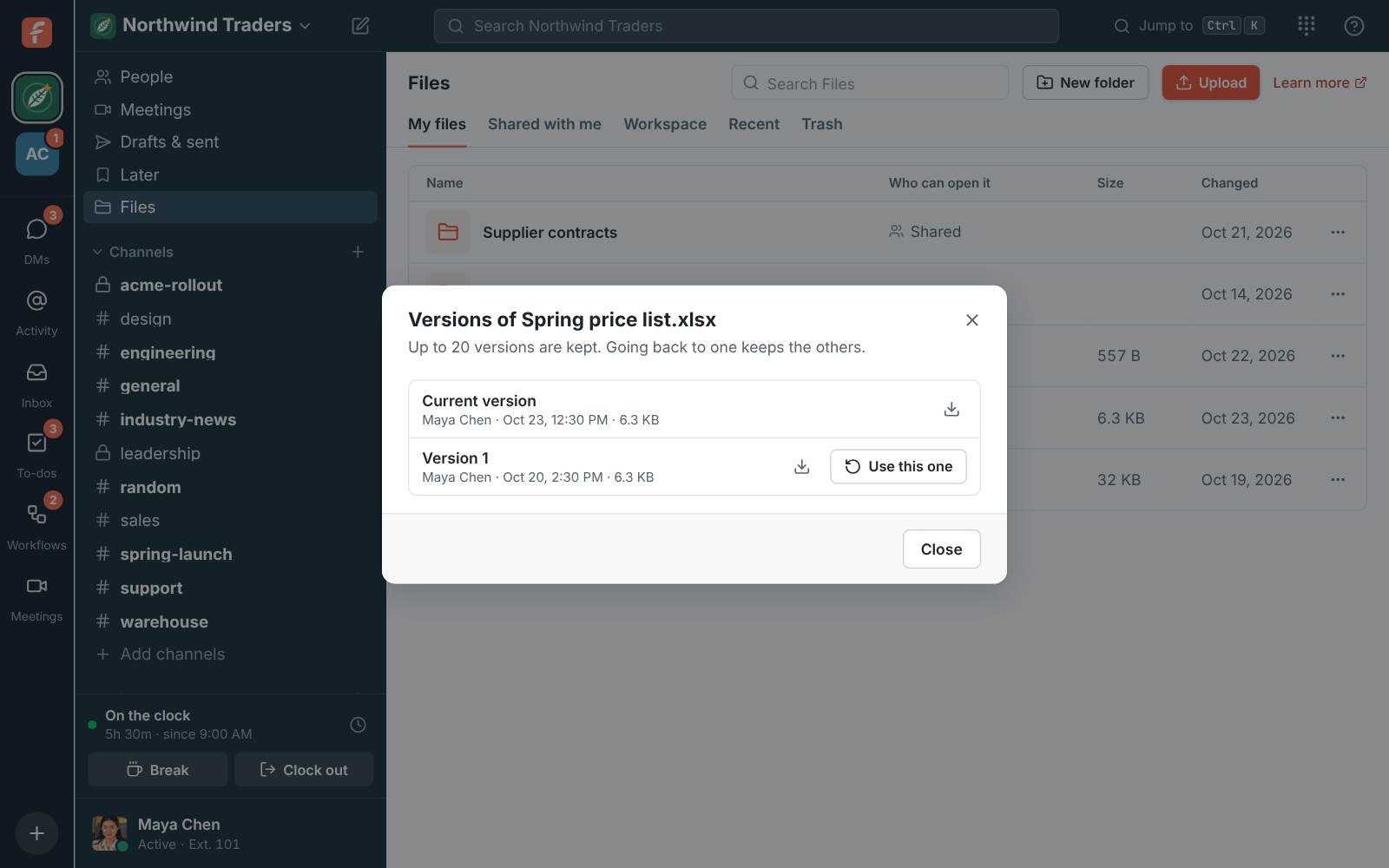
Section titled “Versions”Uploading a new version keeps the old one. Choose Upload a new version from a file’s ⋯ menu and pick the file from your computer: the name in Files stays the same, and links and shares keep working. Versions lists them, newest first, with who uploaded each. Download any of them, or click Use this one to make an earlier version the current one again. Up to 20 versions are kept; the oldest goes when there are more.
Send a file from Files
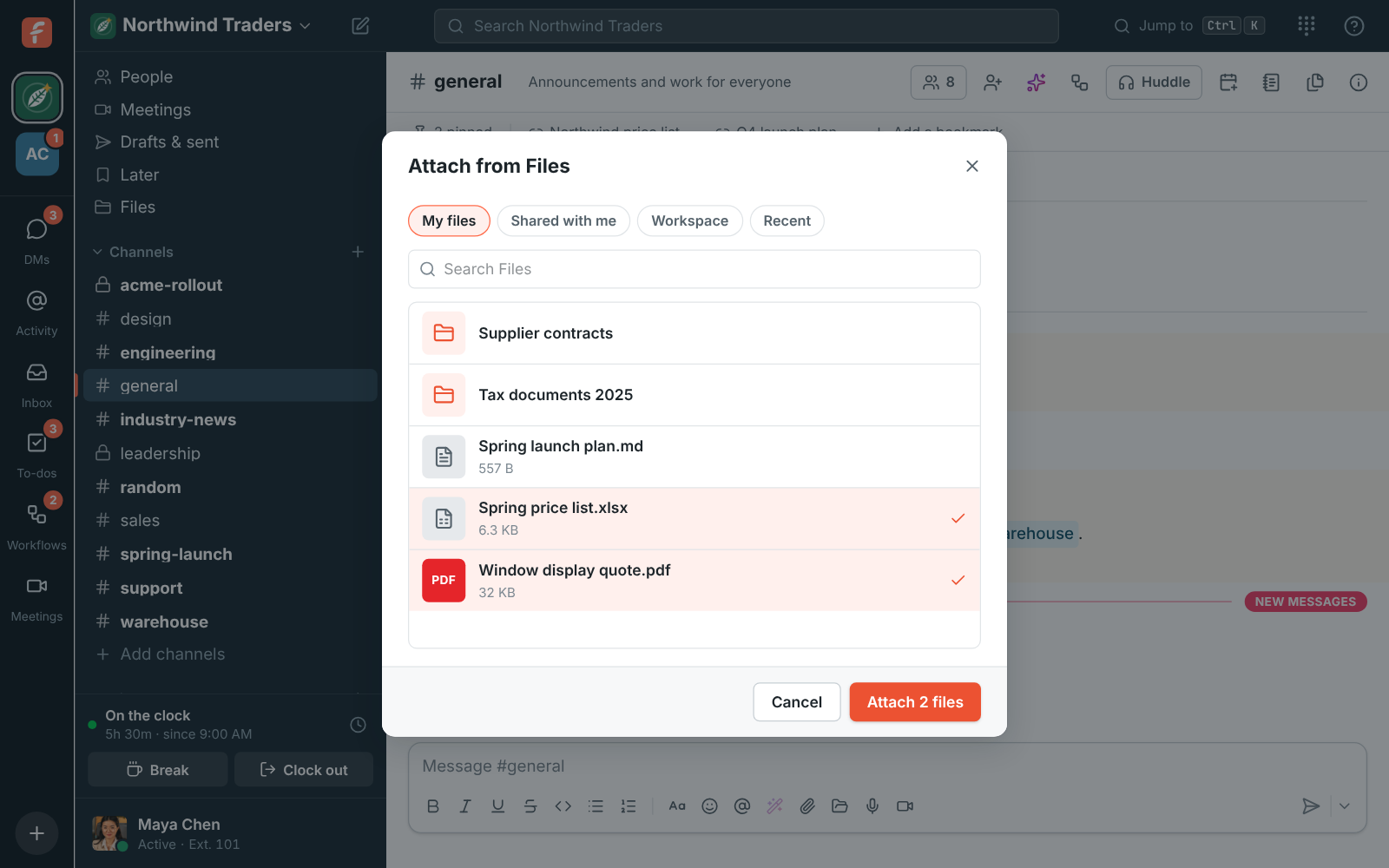
Section titled “Send a file from Files”In any conversation, click the folder button next to the paperclip in the message box (Attach from Files), pick one or more files and click Attach. They’re added to your message like files from your computer. The message gets its own copy, so changing or deleting the file in Files later doesn’t change what you sent.
The trash
Section titled “The trash”Move to trash puts a file or folder (with everything in it) in Trash for 30 days. Restore puts it back where it was, or at the top when that folder is gone too. Delete forever deletes it, and every version of a file, straight away. You see what you deleted and what was deleted from your own files; admins also see what was deleted from the workspace’s folders. Moving something to the trash, restoring it and deleting it forever take full access.
On your phone
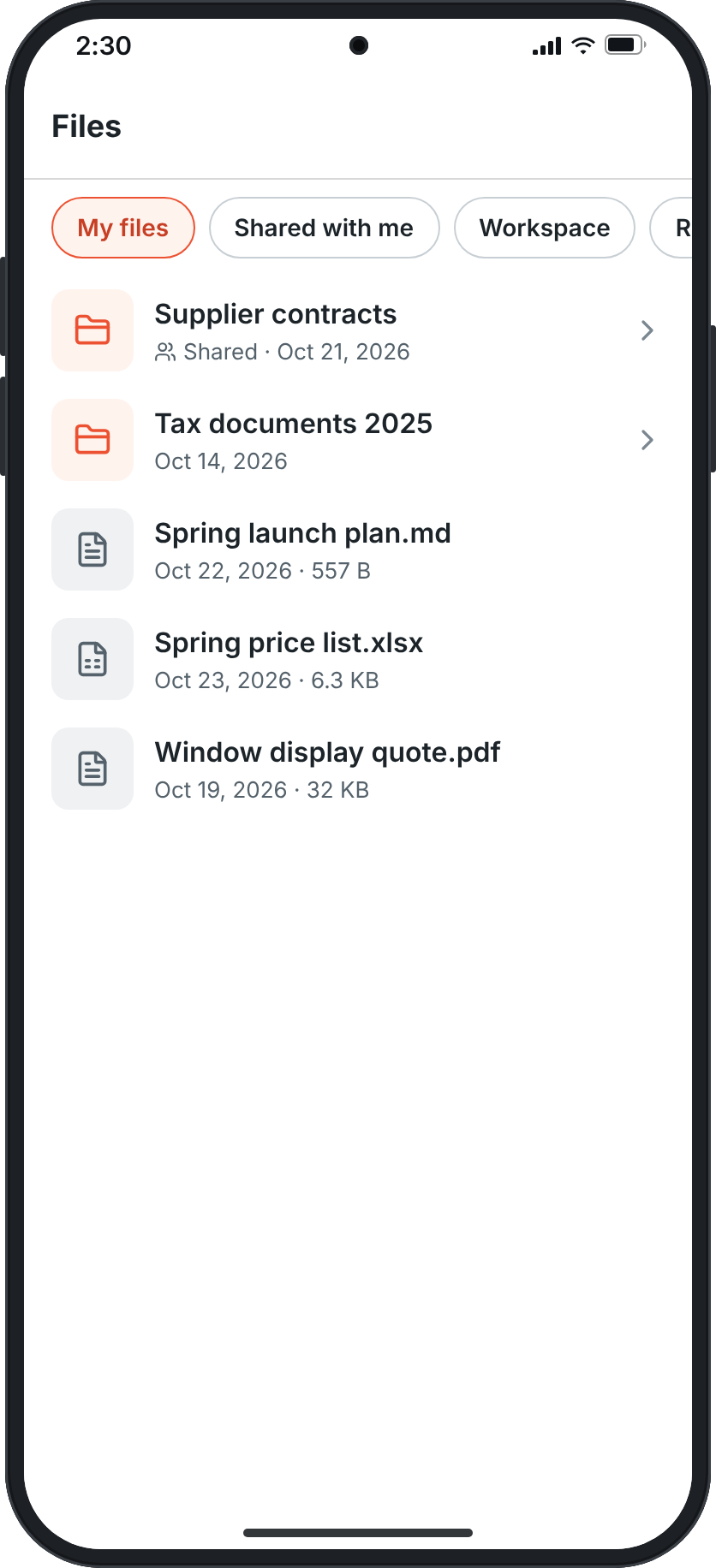
Section titled “On your phone”In the mobile app, You → Files shows My files, Shared with me, the workspace’s folders and Recent. Tap a folder to go in and a file to open it. Press and hold files to select them, then Share sends them to another app.
When someone leaves
Section titled “When someone leaves”When someone leaves the workspace or an admin removes them, their My files don’t disappear: they move to the workspace’s owner, in a folder named Files from and their name, with the same shares as before. What others had shared with them stops being shared.
Answers come from the Freesbe guides and are written by AI, so check the linked guide before relying on one. Please don't include personal details such as emails or passwords.